
NXP BCM856BS: A Comprehensive Technical Overview of the Low-Voltage PLL Clock Translator
In the realm of high-speed digital systems, precise clock generation and distribution are fundamental to ensuring signal integrity and synchronous operation across various subsystems. The NXP BCM856BS stands as a critical component in this domain, serving as a low-voltage phase-locked loop (PLL) clock translator designed to meet the stringent requirements of modern electronic applications. This device is engineered to provide flexible clock frequency synthesis and translation, making it indispensable in telecommunications infrastructure, networking hardware, data centers, and advanced computing systems.
At its core, the BCM856BS integrates a high-performance PLL that can generate multiple output frequencies from a single input reference clock. The device operates at a low supply voltage, typically 2.5 V or 3.3 V, which aligns with the power requirements of contemporary low-power digital circuits, thereby reducing overall system power consumption. The PLL mechanism ensures that the output clocks are phase-aligned and exhibit low jitter, which is crucial for maintaining timing accuracy in high-speed data transmission.
The translator supports a wide range of input and output frequencies, often accommodating signals from a few megahertz up to several hundred megahertz. This flexibility allows designers to use the BCM856BS as a clock multiplier, divider, or frequency translator, adapting a master clock to various frequencies needed by different ICs on the board, such as processors, FPGAs, ASICs, and memory interfaces. Its ability to synchronize multiple clocks from a single source helps in minimizing skew and jitter across the system.
Key features of the BCM856BS include differential output configurations, such as LVPECL (Low-Voltage Positive Emitter-Coupled Logic), which are preferred for their high noise immunity and suitability for long traces on PCBs. Some variants may also support other output types like LVDS (Low-Voltage Differential Signaling) or HCSL (High-Speed Current Steering Logic), providing designers with options to match the impedance and signaling standards of their specific application.
The device typically offers programmable settings via external resistors or through an I²C interface, enabling in-system adjustments for output frequency, output enable/disable, and other parameters. This programmability enhances design flexibility, allowing for dynamic configuration without hardware changes. Moreover, the BCM856BS includes features like spread spectrum modulation, which can be employed to reduce electromagnetic interference (EMI) by dithering the output frequency, thus aiding in compliance with EMC regulations.
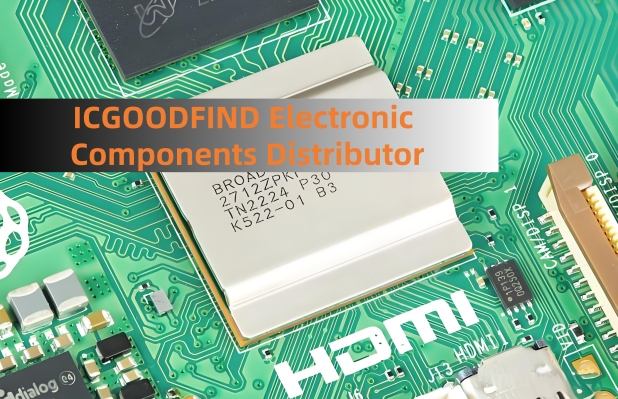
In terms of packaging, the BCM856BS is commonly available in a compact form factor, such as a 32-pin QFN (Quad Flat No-Lead) package, which is ideal for space-constrained layouts. Its robust design ensures reliable performance across industrial temperature ranges, making it suitable for both commercial and industrial environments.
ICGOODFIND: The NXP BCM856BS is a highly versatile and efficient low-voltage PLL clock translator, offering exceptional jitter performance, flexible frequency synthesis, and multiple output options. It is an optimal solution for complex digital systems requiring precise and stable clock distribution, ultimately enhancing system reliability and performance.
Keywords:
Low-Voltage PLL
Clock Translator
Frequency Synthesis
Jitter Performance
Differential Outputs

